
Home Industry Oil and gas UAE and Foreign Buyers Give Ri...
Oil And Gas
CIO Bulletin,
08 May, 2026
Author:
Sambhrant Das
Global producers resort to high stakes maritime evasion as the uae and international buyers deploy dark tankers to navigate the strait of hormuz blockade
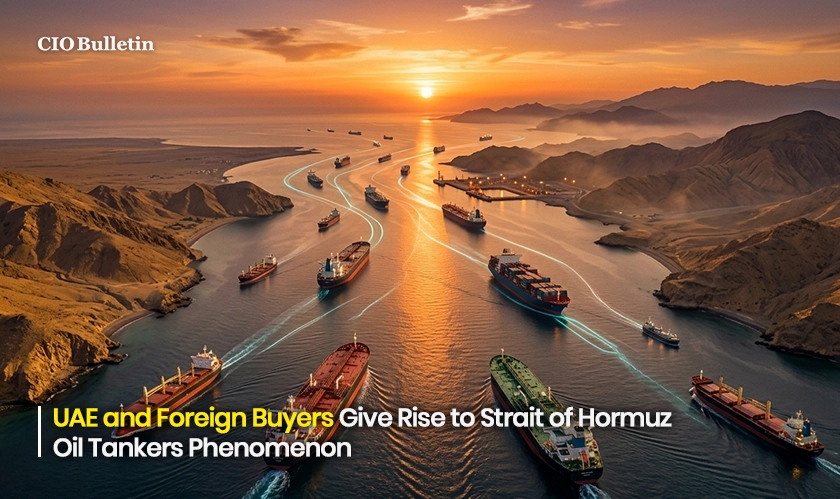
On May 7, industry sources revealed that the United Arab Emirates (UAE) and several international buyers have clandestinely sailed crude oil tankers through the Strait of Hormuz to move oil bottled up in the Gulf due to the conflict in the Middle East. While these Strait of Hormuz oil tankers’ shipments represent only a fraction of the UAE’s pre-war export capacity, the risks undertaken by the UAE and others to bypass the blockade are an indication of the extent to which global producers are willing to go to restore disrupted energy supply lines.
The Abu Dhabi National Oil Company (ADNOC)’s shipments are susceptible to attacks from Iran, as evident in the UAE accusing it of targeting an empty tanker with drones during its passage through the Strait of Hormuz. To evade detection and reduce the likelihood of being spotted by Iranian forces, the ships traverse the strait with their automatic identification system transponders turned off. Interestingly, Iran uses the same tactic to avoid US sanctions on its oil exports. In a recent high-profile case, VLCC Hafeet, a crude oil tanker of Liberian origin, transferred its cargo to VLCC Olympic Luck off the UAE’s Fujairah by following a carefully planned operation:
First, on April 7, it loaded 2 million barrels of Upper Zakum crude at Zirku terminal.
Second, on April 15, Hafeet passed the Strait of Hormuz.
Third, Hafeet transferred cargo to the VLCC Olympic Luck off Fujairah.
The oil, after reaching its port of arrival, is usually transferred to larger vessels for delivery to Southeast Asian refineries or sent to storage terminals in Oman and refineries in South Korea.
Significantly, the UAE has reportedly secured premiums, up to $20 per barrel over official prices, from buyers who are desperate for supply. Traditional convention dictates “hidden” tankers being used by sanctioned nations, but the UAE and other buyers adopting this strategy highlight the severe economic ramifications of the current maritime blockade. Gulf nations are hopeful of the US and Iran continuing to observe the recently announced ceasefire while working towards a permanent cessation of hostilities for exports to resume at scale. A catch to the present strategy of covert operations is finding buyers willing to purchase “dark” transits. CIO Bulletin is of the view that the progress of peace talks and the willingness of international naval forces to maintain a presence in the region without causing further escalation will dictate the continued use of these tactics.











 consultants ltd.jpg)


