
Home Industry Oil and gas United Arab Emirates Announces...
Oil And Gas
CIO Bulletin,
29 April, 2026
Author:
Sambhrant Das
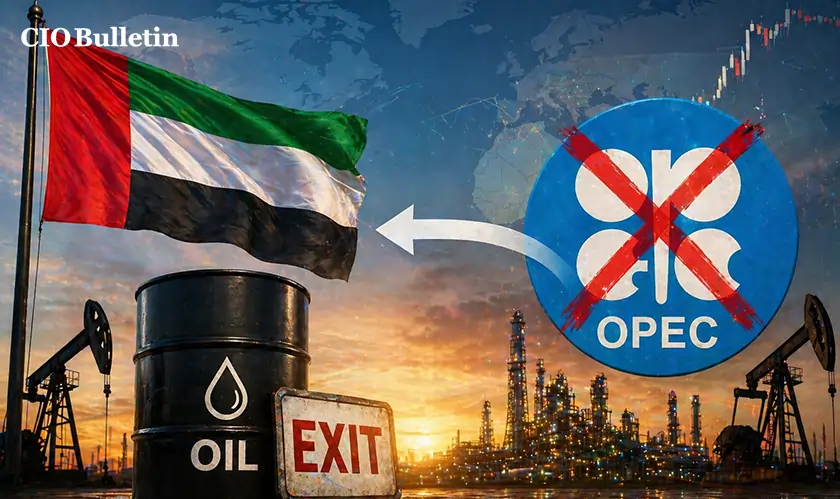
The UAE is set to exit the OPEC oil cartel on May 1, seeking to boost domestic production and escape production quotas amid rising tensions with Saudi Arabia.
The United Arab Emirates recently announced that it will leave the OPEC oil cartel effective May 1, a move that will deprive the cartel of its third-largest producer and further weaken its authority in negotiations over global oil supplies and prices. Importantly, the UAE’s decision follows indications of its recent exit due to disagreements over OPEC production quotas, which it felt were set too low for the country to sell oil to buyers at higher profits, among other reasons. The two main reasons behind UAE's decision to leave OPEC stem from its need to boost oil production in its new energy facilities and from OPEC member states loosening their traditional bonds after Qatar left the organization in 2019.
Furthermore, regional politics have also played a significant role in UAE’s decision. The country’s relations with Saudi Arabia, OPEC’s largest producer, have worsened in recent years due to disagreements over political and economic matters in the Middle East. Interestingly, this has continued even after both came under attack by fellow OPEC member Iran during the war. In a sign of relief to markets, they are not expected to be immediately impacted following the UAE’s withdrawal from the oil cartel because world oil supplies are already constrained due to the closure of the Strait of Hormuz during the ongoing Iran war. OPEC has also witnessed a decline in its market power due to the US producing 13 million barrels a day over Saudi Arabia’s 10 million barrels a day.
According to the UAE’s state-run WAM news agency, “This decision reflects the UAE’s long-term strategic and economic vision and evolving energy profile, including accelerated investment in domestic energy production. It would also bring additional production to market in a gradual and measured manner, aligned with demand and market conditions.” CIO Bulletin views the UAE’s withdrawal from OPEC as a monumental setback for the oil cartel, with the market losing a valuable shock absorber and the largest producer, Saudi Arabia, having to shoulder more responsibility for stabilizing prices.














 consultants ltd.jpg)


