
Home Industry Politics French Fuel Protests Spark Eur...
CIO Bulletin
,
20 October, 2026
Author:
Ravathi Sunil
Widespread public dissatisfaction over soaring energy tariffs shifts electoral dynamics across key continental nations.
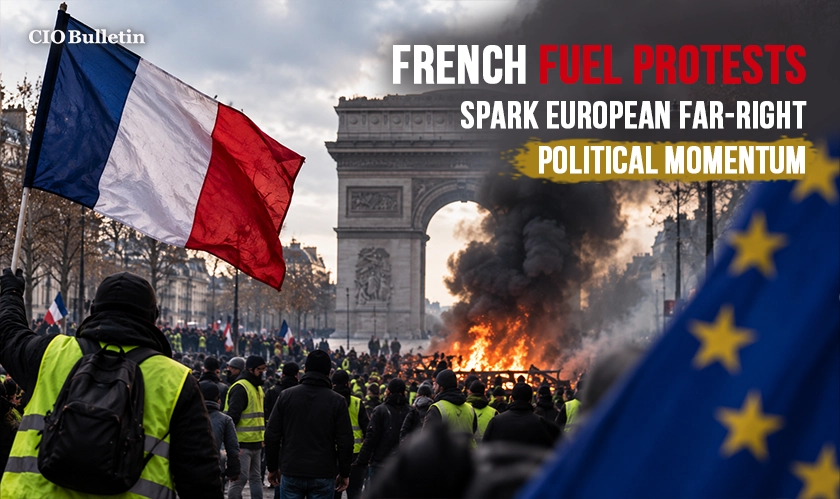
CIO Bulletin reports on expanding political instability across Western Europe as French fuel protests ignite intense public debate over rising living costs. Public protests over increased costs of fuel and energy tariffs have rocked major cities, causing considerable regional disturbances. The frustration of people in different industries due to financial strains is on the rise, and the government finds itself in an increasingly unhappy society prior to key continental elections.
It is the prevalence of such economic grievances that makes populism politically attractive. While official alliances have difficulty stabilizing domestic energy prices, opposition forces use popular dissatisfaction to mount an attack on established political orders. It has been noted that economic conditions tend to influence voter priorities in times of high inflation.
Will traditional political parties successfully address widespread cost-of-living concerns before upcoming electoral deadlines? Political momentum shifts as right-leaning parties capitalize on public demands for immediate economic relief and energy cost caps. Highlighting this shift, a senior European political analyst noted, "Elevated energy prices directly erode public trust in incumbent administrations while accelerating populist support across the voting populace."
Economic Unrest: Surging petrol prices spark widespread public demonstrations across major continental urban hubs.
Political Shifts: Opposition parties gain significant momentum by promising immediate cost-of-living interventions.
Electoral Impact: Upcoming European elections face dynamic shifts as economic stability becomes the dominant voter focus.
Policy Challenges: Incumbent governments struggle to balance environmental targets with immediate energy affordability.
Now that dissatisfaction is being felt on an increasingly global scale as it crosses the boundaries of nation-states, it becomes vital for international observers to follow economic trends. Will continental governments be able to establish economic stability and stability in energy markets before political instability changes the course of national policies?
Strategic Outlook
As economics mixes with elections, the leadership of Europe is faced with an ever more complicated operational environment. It is their ability to juggle economic policy with citizen relief that will ultimately determine whether or not they have political stability for their election cycles to come.
News Source: Reuters, https://www.reuters.com/
Everything you need to know about this news
Sharp increases in consumer petrol prices and general energy tariffs sparked widespread public frustration regarding overall household cost-of-living pressures.
Opposition factions leverage economic dissatisfaction by advocating for immediate energy price caps, tax reductions, and alternative economic policies.
Shifting voter priorities toward cost-of-living relief could significantly alter legislative balances and reshape national policy frameworks across the continent.
Governments are attempting to introduce targeted energy subsidies and public relief measures while simultaneously working to maintain fiscal discipline.
Continued political instability and changing policy leadership can influence energy regulation, corporate investment confidence, and long-term economic planning across Europe.













































 consultants ltd.jpg)


Comments