
Home Industry Real estate How Professional Carpet Cleani...
CIO Bulletin
,
05 October, 2026
Author:
CIO Bulletin Team
Office carpet absorbs daily foot traffic, dirt, spilled drinks, and fine grit from building entrances. Without regular care, those materials work into the pile and wear down fibers before the carpet appears severely damaged. Professional cleaning removes embedded soil, controls moisture, and protects the surface from premature deterioration. A consistent maintenance plan also supports a cleaner workplace and reduces avoidable replacement costs. The first step is recognizing how ordinary office activity creates hidden carpet damage.
Shoes carry sand, dust, and other abrasive particles indoors. These particles settle between carpet fibers, where repeated footsteps grind them against the backing and gradually weaken the pile.
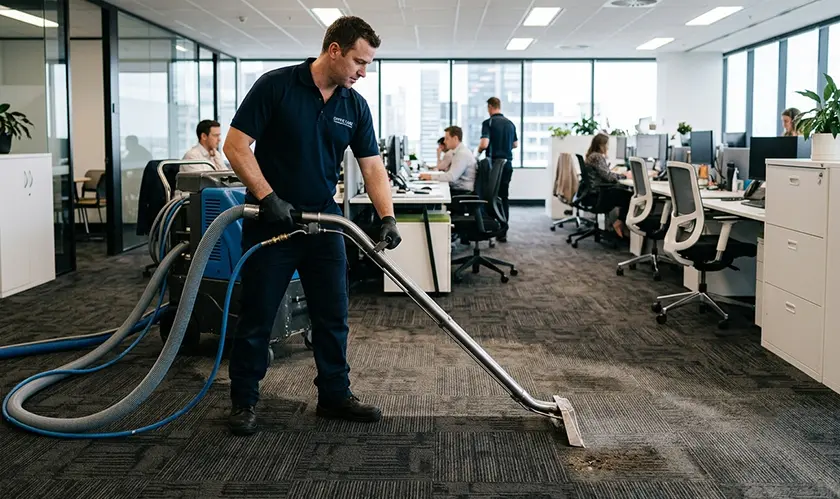
Office managers who schedule recurring commercial carpet cleaning safeguard their carpets by getting abrasive soil removed before it cuts into carpet fibers. Professional technicians also treat spills according to the carpet's condition, reducing residue that attracts fresh dirt. This care protects the pile, improves appearance, and helps office flooring remain serviceable longer between replacements.
Spills create a second problem. Liquids carry soil deeper into the carpet, while sugary residues attract more dirt after the surface dries. Improper spot cleaning can also leave sticky deposits or spread stains across a wider area.
High-traffic zones usually show damage first. Entryways, elevator paths, corridors, and spaces near desks receive repeated pressure throughout the workday. Without planned cleaning, those areas develop flattened fibers, dark traffic lanes, and permanent discoloration.
Professional cleaning reaches soil that routine vacuuming leaves behind. Vacuuming removes loose particles from the upper surface, while deeper cleaning extracts material lodged around the fiber base.
Hot water extraction uses heated water and controlled recovery to remove dissolved soil. Dry cleaning uses limited moisture and supports areas that need a faster return to service. Carpet shampooing and dry foam provide other options for specific carpet conditions.
The correct method depends on fiber type, backing, soil level, and drying requirements. A trained technician evaluates those factors before selecting equipment and cleaning agents. That decision limits unnecessary friction, excessive moisture, and repeated treatment.
Controlled moisture also protects the carpet backing and the floor beneath it. Excess water can create lingering odors, adhesive problems, or slow drying. Professional equipment removes moisture more thoroughly than improvised cleaning methods.
A carpet with loose surface soil needs a different approach than one with ground-in traffic lanes. Pre-vacuuming removes dry particles before deeper cleaning begins, which prevents them from turning into muddy residue.
Spot treatment requires equal care. Technicians identify the substance, apply a suitable agent, and remove the residue without spreading the mark. Aggressive rubbing often damages fibers and enlarges the affected area.
High-traffic corridors may require more frequent attention than private offices. Cleaning frequency should reflect foot traffic, entrance exposure, food service, and the presence of wheeled equipment. A practical schedule addresses those conditions instead of applying one interval across the entire building.
Daily vacuuming controls loose grit before it reaches the carpet base. Staff should concentrate on entrances, corridors, reception areas, and other paths that receive constant traffic.
Routine professional cleaning should follow the building's use pattern. Busy offices need more frequent service than lightly occupied spaces, while seasonal weather can increase soil brought indoors. Seasonal rain and winter salt increase tracked-in grit near entrances. Those areas deserve earlier vacuuming and professional service before abrasive particles spread throughout the office during wet weather.
Prompt spill response also protects carpet life. Employees should report spills quickly, and custodial staff should use approved procedures rather than household products. Fast action prevents stains from setting and limits moisture exposure.
Managers should track visible traffic lanes, recurring spills, odors, and drying problems. Those observations help technicians adjust methods and service timing. A written record also shows whether cleaning is extending usable carpet life.
Professional carpet cleaning extends office floor life by removing abrasive soil, limiting residue, and controlling moisture before damage becomes permanent. The most effective plan combines regular vacuuming, prompt spill treatment, and scheduled deep cleaning based on traffic patterns. Building managers should inspect entryways, corridors, and shared work areas each month, then adjust service frequency where wear appears first. That simple review helps preserve carpet condition and delays the disruption and expense of replacement.




















































 consultants ltd.jpg)


Comments