
Home Technology Regtech Nigeria Pushes Smart Regtech D...
CIO Bulletin
,
23 May, 2026
Author:
Gayathri Sr
Smart regulations step in to bridge Africa’s massive financial divide, eliminate billion-dollar fraud gaps, and secure borderless growth.
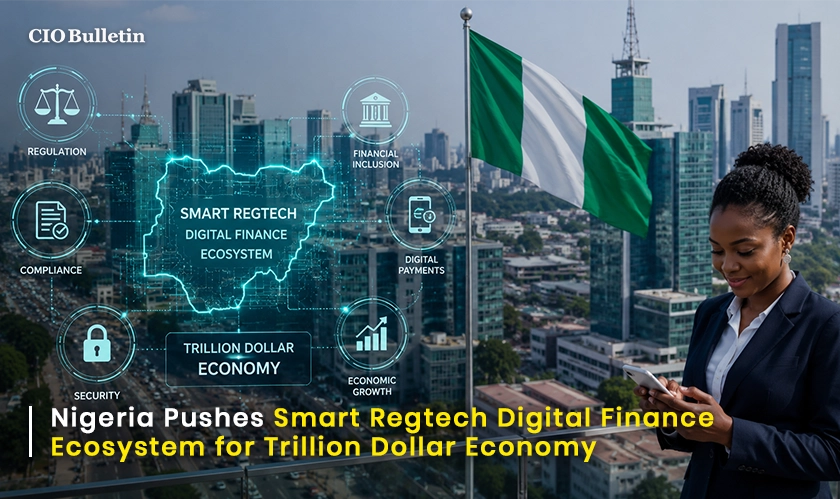
The race to build Africa's borderless economic future has taken a dramatic leap forward, with the adoption of a secure RegTech digital finance ecosystem emerging as the ultimate gatekeeper. At the recently concluded 2026 RegTech Africa Conference and Expo (#RACE2026) in Abuja, Nigeria’s Presidency made it clear that the nation's future economic competitiveness will no longer rely solely on natural resources like oil, but on its ability to create a highly secure, data-driven financial space. As monitored closely by CIO Bulletin, the federal government is positioning this regulatory technology to safely onboard millions of citizens who are still excluded from the formal banking grid.
The scale of transformation happening across the continent is staggering. While Africa still counts over 900 million adults who lack basic formal bank accounts, mobile wallets and instant digital payment structures have exploded. Nigeria has positioned itself at the absolute forefront of this movement, registering over 70 million active digital wallets. Shockingly, the country’s instant payment platforms handled a jaw-dropping 10 billion transactions in 2025 alone, crossing a value threshold of ₦1,000 trillion.
However, this hyper-growth has exposed massive operational vulnerabilities:
Billion-Dollar Leaks: Digital payment systems face rampant cybersecurity threats, costing billions annually.
High Friction Costs: Cross-border African remittance fees remain stubbornly high at over eight percent.
Fragmented Oversight: Inconsistent multi-country rules slow down continental trading initiatives like the AfCFTA.
To combat these threats, the administration is aggressively pushing a unified RegTech digital finance ecosystem as a core pillar of its Renewed Hope Agenda. This initiative combines cutting-edge tools, including blockchain, artificial intelligence, automated data intelligence, and advanced digital identity architecture to detect real-time fraud while keeping the onboarding process smooth for underserved communities.
The Central Bank of Nigeria (CBN) confirmed that modern financial oversight must switch to automated predictive systems to match the pace of fintech growth.
“The world is witnessing a transformation where technology is no longer merely supporting governance; it is redefining it,” stated Dr. Nurudeen Abubakar Zauro, Technical Adviser to the President on Economic and Financial Inclusion
Ultimately, Nigeria’s goal to reach a one-trillion-dollar economy by 2030 rests on its capacity to establish unbreakable digital trust. By blending rigid consumer safety with highly responsive, innovation-friendly policy, the country is mapping out a blueprint for secure financial infrastructure that other developing nations can easily follow.














.webp)




































 consultants ltd.jpg)


