
Home Industry Healthcare Global Alarm Raised Over Ebola...
CIO Bulletin
,
29 May, 2026
Author:
Gayathri Sr
A rare and aggressive viral strain triggers immediate international response and event postponements.
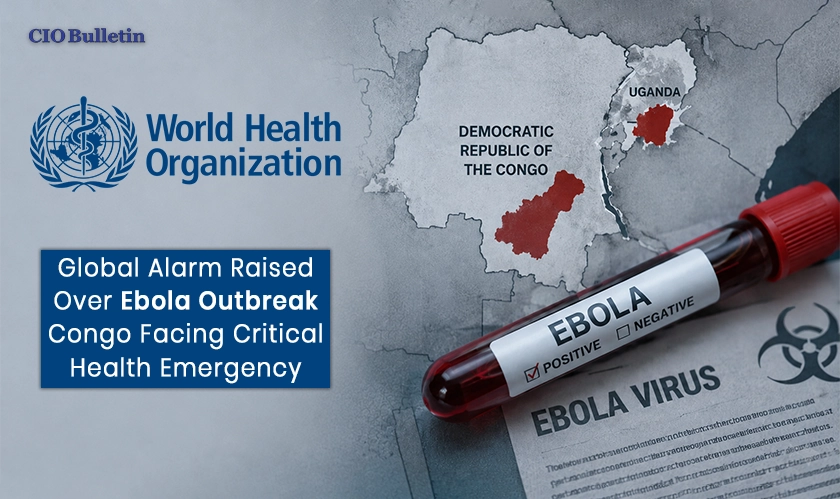
A sudden wave of infections has put global health authorities on high alert as the World Health Organization (WHO) officially declares a public health emergency of international concern. The decision follows a worrying surge in cases linked to the rare Bundibugyo strain, making the current Ebola outbreak Congo and Uganda are battling a top priority for international containment efforts. With hundreds of suspected cases rising rapidly, medical experts are racing against time to prevent a wider crisis.
According to data analyzed by CIO Bulletin, a total of 650 suspected cases, including 144 tragic deaths, have been reported across the affected regions. While the WHO clarified that the situation has not reached a pandemic level, the sheer speed of transmission has forced governments worldwide to take drastic preventative measures.
The ripple effects of the crisis are already being felt economically and diplomatically. In a major move to safeguard public health, the highly anticipated India-Africa Forum Summit in New Delhi was postponed just days before its scheduled launch.
Countries outside the immediate zone are not taking any chances. Governments have rapidly issued strict travel advisories for citizens residing in, traveling to, or returning from the affected African nations. Fortunately, strict screening measures have successfully kept many nations entirely free of the virus so far.
The primary challenge for medical teams is the nature of this specific Ebola strain, for which no approved vaccine currently exists.
“It could take up to nine months before a vaccine against this particular species of Ebola is ready,” stated WHO advisor Dr. Vasee Moorthy.
While two promising candidate vaccines are actively in development, neither has completed the necessary clinical trials to ensure public safety.
Health literacy remains the most powerful tool for containment. The virus behaves in specific, recognizable ways:
Transmission: It primarily spreads through direct contact with the bodily fluids of an infected person or animal, as well as contaminated surfaces.
Incubation: Symptoms can take anywhere from 2 to 21 days to appear.
Early Signs: Sudden fever, intense fatigue, muscle pain, headache, and a sore throat.
Advanced Stages: Progression to vomiting, internal complications, and impaired organ function.
With an average fatality rate hovering around 50 percent, the global community remains hyper-focused on supporting the frontlines and stopping the virus in its tracks.














.webp)




































 consultants ltd.jpg)


