
Home Technology SAP Tech Integration Strategy SAP ...
CIO Bulletin
,
27 May, 2026
Author:
Gayathri Sr
Modern cloud architecture enables industrial giant to eliminate manual workflows and scale across global markets.
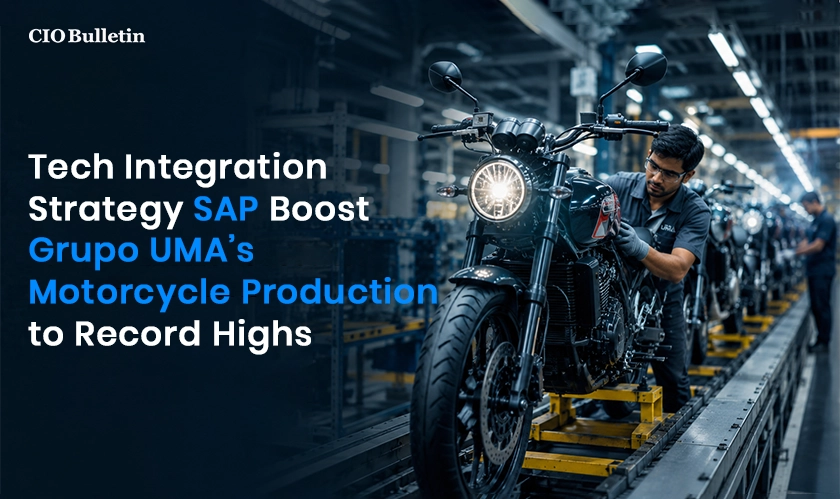
A massive shift is underway in the transportation sector as manufacturing giants quit old-school spreadsheets for advanced automation. According to tech analysts at CIO Bulletin, the recent initiative to SAP Boost Grupo UMA’s Motorcycle Production stands out as a prime example of how modern cloud infrastructure can rapidly scale an enterprise while keeping product quality completely flawless.
Grupo UMA, a prominent vehicle manufacturer distributing across Colombia and Central America, previously struggled with disconnected data and time-consuming manual entry. Facing a booming market, leadership launched a digital overhaul dubbed project “Adventure.” By moving their operations onto a unified private cloud system, the company connected its entire supply chain, from finance and parts inventory straight to the assembly floor.
The transition completely transformed daily factory life. Instead of relying on stressed staff to constantly balance chaotic spreadsheet files, supervisors now use a single live dashboard. This setup gives leadership instant visibility into raw materials, warehouse capacity, and assembly line speeds.
The strategic upgrade yielded immediate benefits:
Massive Output Gains: Factory lines streamlined operations to meet unprecedented regional customer demand.
Standardized Logistics: Successful operational playbooks built in one country are now instantly copied into new global regions.
Data-Driven Decisions: Teams shifted their daily focus from tedious operational chores to strategic business growth.
The results of this technological evolution are concrete. Highlighting the sheer speed of their operational growth, Mauricio Urrea Ospina, Chief Technology Officer at Grupo UMA, noted:
“We went from assembling 11,000 motorcycles in January of last year to around 17,000 motorcycles per month today, nearly doubling our output.”
Ultimately, the company proves that corporate growth is no longer just about building a better physical product. As industrial supply chains become more complex, true market leaders are realized by those who build a smarter digital foundation.


















































 consultants ltd.jpg)


