
Home Technology Science and technology What to Check When Your Water ...
CIO Bulletin
,
19 August, 2026
Author:
CIO Bulletin Team
A water heater that suddenly delivers cold water may have a simple control problem, a failed component, or a developing safety issue. The first response should be calm and methodical. Residents can identify useful clues by checking the fuel source, listening for unusual sounds, examining nearby fittings, and comparing temperatures at several fixtures. These observations help distinguish a heater malfunction from a localized plumbing defect, while reducing the chance of unsafe trial and error.
Before arranging service, residents should confirm whether every outlet produces cold flow or only one fixture does. Anyone researching hot water not getting hot can use that distinction to narrow the cause. A single cold shower may involve a worn cartridge or mixing valve. Cold water throughout the residence points more strongly toward the heating system, power supply, or fuel delivery.
Electric heaters require uninterrupted power from the service panel. A tripped breaker can stop heat production without leaving visible damage. Residents may reset the labeled switch once, then observe the result. If it trips again, an overloaded circuit, damaged wire, or internal component may be responsible. Repeated resets increase risk and should be avoided.
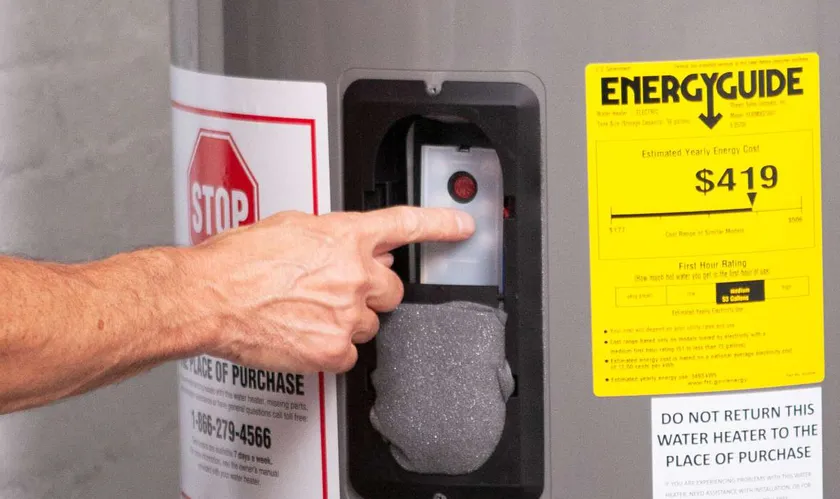
Many electric tanks also contain a high-temperature cutoff behind an access panel. Power must remain disconnected before that cover is removed. A failed thermostat, loose connection, or burned heating element can trigger the control. Testing with proper equipment is safer than handling exposed electrical parts.
Gas-fired units depend on fuel flow, ignition, and unobstructed exhaust. When the pilot flame goes out, the tank can remain cold. The product manual usually provides relighting instructions. If the flame will not stay lit, a blocked pilot opening, worn thermocouple, or defective gas control may require service.
A closed supply valve can produce the same symptom. Its handle generally aligns with the pipe when open. Any gas odor requires immediate evacuation, avoidance of electrical switches, and contact with the local gas emergency provider. Residents should never investigate a suspected leak themselves.
A thermostat set below the household’s usual preference can mimic equipment failure. Many residences set the thermostat to approximately 120 degrees Fahrenheit, which supports comfortable bathing while limiting the risk of scalding. Some storage units have separate upper and lower controls, so a single setting may not address every symptom. Adjustments should follow the manufacturer’s instructions.
Temperature changes require recovery time. A storage tank cannot refill its full supply immediately after a control adjustment. If the water remains cold after adequate recovery, a thermostat or heating element may have failed. Safety checks should come before further testing.
Moisture around the tank may come from a loose connection, failing valve, or corrosion inside the vessel. Even a minor fitting leak can waste heated water continuously and reduce available supply. Residents can place a container beneath a small drip and close the cold-water inlet if leakage becomes substantial.
A pressure relief valve may discharge because of excessive pressure or a defective valve. Its outlet must remain open and unobstructed. Water emerging from the tank body usually indicates internal corrosion. Once that damage develops, replacement is generally safer than attempted repair.
Mineral deposits accumulate inside storage tanks, particularly in regions with hard water. A thick layer can cover heating elements, reduce usable capacity, and produce popping or rumbling sounds. Recovery also slows, causing showers to lose warmth sooner than expected.
Routine flushing can limit deposits, although the process varies by equipment type. Professional assistance is appropriate for heavy accumulation, advanced tank age, or an unfamiliar drain arrangement. Tankless systems may also require periodic scale removal using an approved cleaning method.
One cold faucet does not prove that the heater has failed. A deteriorated cartridge can incorrectly blend cold and warm supplies. Shower valves may cause similar symptoms when internal seals wear down. Comparing several outlets helps determine whether the issue affects the entire plumbing network.
If every fixture produces cold flow, the heater deserves closer attention. If one location remains affected, servicing that fixture may resolve the complaint. This comparison prevents unnecessary work on a functioning tank or heating assembly.
Professional service is warranted if electrical damage, gas problems, repeated breaker trips, pressure concerns, or tank leakage are present. Qualified technicians can measure voltage, evaluate combustion, test thermostats, and verify safety controls. Their findings also help determine whether repairing a component or replacing the unit makes better financial sense.
Equipment age influences that choice. An older tank may have corrosion, weakened insulation, or recurring component failures. A newer model with one defective part may justify repair. Written estimates should identify labor, replacement parts, expected service life, and installation requirements.
Cold water does not automatically mean the entire heater has failed. A focused review of electricity, gas flow, temperature controls, leakage, mineral deposits, and fixtures can reveal the likely source. Safety must guide each step, especially near live circuits, fuel lines, pressure outlets, and exposed wiring. If symptoms persist or damage becomes visible, qualified diagnosis protects residents and supports a sound repair or replacement decision. Regular maintenance can also reduce interruptions, waste, and avoidable operating expense.





















































 consultants ltd.jpg)


Comments