
Home Technology Software Can Democratic Access to Indus...
CIO Bulletin
,
19 June, 2026
Author:
Sambhrant Das
Engineering conglomerates launch specialized cloud computing bundles to help early stage deep tech groups compress complex product development timelines
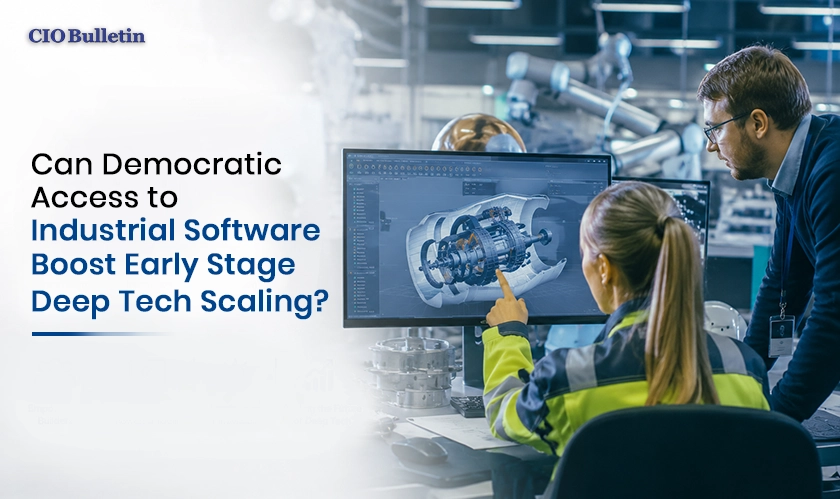
The baseline structural layout of high-tech manufacturing is experiencing a deliberate transformation as massive digital design tools open to bootstrapping enterprises. Engineering giant Siemens has launched a highly specialized regional initiative at the VivaTech conference to distribute its top-tier industrial software to resource-constrained teams. This focused rollout targets systemic operational bottlenecks by delivering preconfigured, heavily discounted application bundles that match narrow venture timelines. By expanding access to dense cloud-native testing architectures, tech architects aim to eliminate the prohibitive cost barriers that historically stall early-stage physical product development.
The functional deployment of this updated software framework focuses on bridging the wide operational gap separating laboratory prototypes from scalable, market-ready industrial production lines. Budding design groups can now leverage enterprise-level validation ecosystems without maintaining heavy, on-premise computing hardware arrays.
Preconfigured Tool Clusters: Tailored software bundles streamline basic mechanical design, multi-physics validation, and complete lifecycle management.
Market Integration Channels: Onboarded companies receive immediate placement avenues within global enterprise sales platforms, maximizing international brand visibility.
Unified Digital Continuity: Clean end-to-end cloud connections synchronize active hardware blueprints directly with operational factory-floor logistics.
Reflecting on how structural cross-industry alliances accelerate commercial deployments, Peter Koerte, Chief Technology Officer at Siemens AG, explained, "Startups contribute speed while Siemens contributes industrial depth and trusted global customer relationships."
Deploying these accessible, high-fidelity simulation networks allows agile European startups to completely bypass slow physical prototyping loops while aggressively compressing time-to-market cycles. By evaluating complex thermodynamic properties and advanced stress tolerances within sandboxed virtual spaces, engineering teams dramatically cut down on material waste and hardware re-engineering fees. This close integration between affordable design tools and local manufacturing setups ensures that expanding deep-tech firms can bring sophisticated concepts to market readiness without absorbing standard initial capital strains.
Transitioning away from fragmented software tools toward a fully integrated, cloud-backed engineering backbone serves as an essential technical shield for capital-intensive aerospace and robotics builders. These unified modeling platforms help designers execute rigorous structural calculations without relying on slow, disconnected testing procedures.
Modular digital twins manage volatile design adjustments smoothly, reducing physical production errors by up to fifty percent.
Advanced stress simulation suites predict complex fatigue behaviors accurately, protecting sensitive component prototypes from catastrophic structural failure.
Standardized layout controls match design specifications directly with international compliance baselines, accelerating official regulatory sign-offs.
As contemporary industrial markets rely heavily on rapid virtual testing to outpace global competitors, regional economic survival depends on equipping early-stage teams with advanced automation platforms. Shifting away from isolated, basic design frameworks toward comprehensive, interconnected simulation structures is becoming a core strategic requirement for firms looking to scale successfully. Re-engineering localized software access ensures that emerging tech centers maintain baseline technical safety while achieving global commercial scale. CIO Bulletin views this development as a highly progressive corporate milestone that could redefine workplace ecosystems across legacy industries.

















































 consultants ltd.jpg)


Comments