
Home Industry Sports The Champions League Business ...
Sports
CIO Bulletin
18 March, 2026
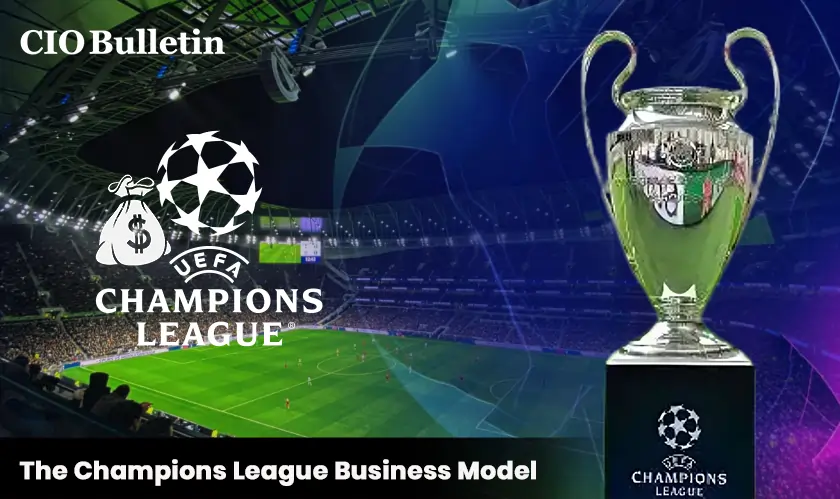
The UEFA Champions League is not just Europe’s premier football competition; it is one of the most sophisticated business platforms in the sports world. While fans see 90 minutes of thrilling football, what unfolds behind the scenes is a complex economic engine blending media rights, sponsorships, matchday revenue, and brand-building. Today, the Champions League stands as a billion-euro industry, generating income on a scale few other sports competitions can match.
CIO Bulletin highlights that understanding the league’s business model is essential, not only for football professionals but also for business leaders seeking lessons in platform monetization, brand equity, and global audience engagement.
The Formula Behind Champions League’s Global Appeal
At its core, the Champions League is designed as a premium content engine. Every season, it delivers high-stakes fixtures featuring Europe’s elite clubs, knockout-round tension, and narratives that captivate millions. Its structure maximizes global attention by carefully scheduling matches for television and streaming audiences across continents.
Consistency is key: the Champions League maintains a strong brand identity through its anthem, visuals, and storytelling, while limiting participation to top-performing clubs, creating scarcity and prestige. This combination makes it highly attractive to advertisers, sponsors, and media companies seeking reliable engagement.
The Champions League Revenue Model Explained
The Champions League amplifies club revenues by concentrating global attention into a short, high-intensity period. Its main income streams include broadcasting rights, sponsorships, and matchday revenue.
Broadcast Rights – The Primary Revenue Driver
Broadcasting remains the largest revenue pillar. Networks worldwide compete for exclusive access because the competition delivers:
Massive live viewership
High advertiser demand
Loyal and repeat audiences
Consistent global appeal
According to Deloitte’s Football Money League, broadcast income is one of the three pillars supporting top clubs’ finances, alongside commercial deals and matchday income. For many clubs, participation in the Champions League can significantly boost annual returns through these media contracts.
Sponsorships and Commercial Deals
The league is a highly attractive platform for premium sponsors. Companies value association with excellence, access to global fanbases, and opportunities for hospitality and B2B networking. Sponsorship deals also extend to digital activations and content rights, reinforcing brand visibility across online and offline channels.
Matchday Revenue – More Than Ticket Sales
Revenue from matchdays extends well beyond simple ticketing. Clubs monetize premium seating, VIP packages, hospitality suites, in-stadium retail, and food & beverage services. These high-margin offerings enhance the overall fan experience while driving significant income. Elite clubs have used matchday revenue growth to invest in infrastructure, marketing, and fan engagement initiatives.
UEFA Distribution Model
While the Champions League generates enormous income, UEFA redistributes a large portion of its net earnings across the football ecosystem. Prize money, solidarity payments, and development funds ensure smaller clubs and national associations benefit. This model sustains competitive balance, nurtures talent, and fuels long-term growth.
CIO Bulletin emphasizes that this approach resembles a platform business model rather than a traditional profit-driven entity. By reinvesting in the broader ecosystem, UEFA preserves the league’s credibility and strengthens European football as a whole.
How the Champions League Creates Competitive Advantage for Clubs
Participation in the Champions League is about more than prize money.
Brand Equity Multiplier
Exposure on a global stage accelerates brand growth, especially in international markets. Clubs see increased sponsorship value, merchandise sales, social media following, and fanbase expansion.
Talent Investment and Performance
Higher profits allow clubs to invest in elite players, performance departments, scouting, and sports science. This generates a positive feedback loop: better talent leads to stronger performance, which attracts more income, reinforcing the club’s competitive and financial position.
Financial Growth Evidence
Top clubs increasingly operate like diversified corporations. Deloitte reports that the top 20 revenue-generating clubs collectively earned €11.2 billion in the 2023/24 season. Real Madrid alone surpassed €1 billion in annual profits, highlighting how industrialized modern football has become.
The “New Format” Effect – More Matches, More Money
UEFA has recently expanded the number of Champions League matches, creating additional monetizable inventory. More games generate:
Increased broadcast opportunities
Expanded sponsorship assets
More digital content for streaming and social media
Greater engagement for betting and fantasy sports platforms
By maintaining product quality while offering more inventories, UEFA ensures demand remains high. CIO Bulletin notes that this strategy reflects broader principles in media and platform business: scarcity and prestige combined with more touchpoints for monetization.
Lessons for Business Leaders
The Champions League offers several takeaways for companies in any industry:
Leverage scarcity and prestige to create premium value.
Diversify revenue streams through media, partnerships, and experiences.
Invest in brand and audience globally, not just locally.
Use platform-based distribution to strengthen ecosystem health.
Balance revenue growth with sustainability, as UEFA does through financial redistribution.
These insights highlight why the Champions League is more than a sports competition, it is a masterclass in building a high-value global brand and monetizing it effectively.
The Rise of Football as a Corporate Industry
Top football clubs now operate like global corporations. Recent financial reports show record-breaking returns, with some clubs crossing the €1 billion mark annually.
At CIO Bulletin, we see this as a shift where sports organizations adopt business strategies similar to tech and media giants, focusing on scalability, branding, and digital engagement.
FAQs
High-value broadcast rights, sponsorship deals, and matchday revenue makes it a multi-billion-euro business model.
Participation boosts brand equity, profits, fan engagement, and thus allowing investment in talent and infrastructure.
UEFA redistributes earnings through prize money, development programs, and solidarity payments to sustain the football ecosystem.
More matches generate additional monetizable inventory, increasing sponsorship and broadcast opportunities.
It combines elite competition, global scheduling and consistent branding to attract top-tier audiences and advertisers.











.webp)







 consultants ltd.jpg)


