
Home Services & Solutions Video solutions Data Centre Physical Security ...
CIO Bulletin, 12 November, 2026
Author:
Ravathi Sunil
As AI demand pushes data centres to grow, operators are turning to smart cameras that spot trouble early, so guards can focus on real threats instead of screens.
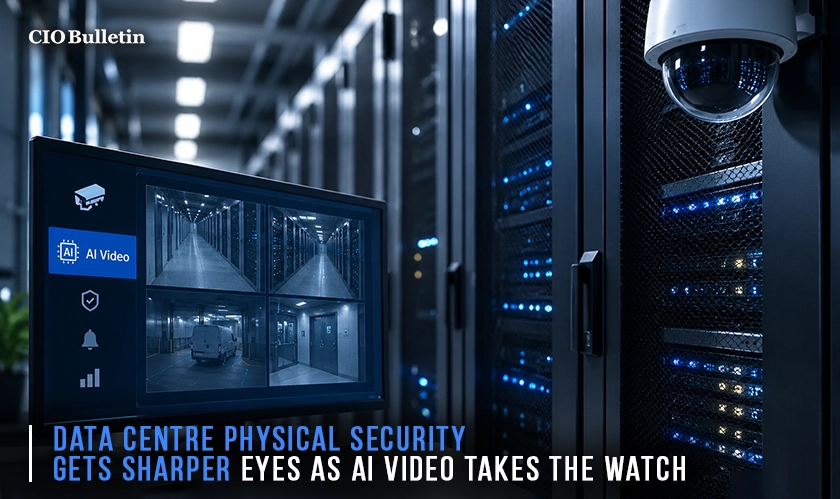
Data centre physical security is getting a high-tech upgrade. As data centres grow to meet soaring demand for AI, operators are turning to AI-powered video and analytics to protect their sites, working alongside the cyber defenses that usually grab the headlines.
A data centre is the physical home of the internet. Rows of servers store and process the data behind banking apps, streaming and AI tools. If someone gets through the door, a firewall cannot stop them. Traditional cameras only record what happens, and people must watch the screens around the clock. Who can keep their eyes open on hundreds of feeds all day?
AI-powered video watches the feeds for people, learning what normal looks like and flagging what does not. Industry experts say these systems can help in several ways:
Spotting tailgating, when someone follows an authorised person through a door.
Telling routine maintenance apart from real threats to cut false alarms.
Linking video with door and access records to speed up investigations.
Sending instant alerts so teams can respond quickly.
The change is about more than sharper pictures. Khanna, a Honeywell executive, said in Data Center Knowledge, “What’s changing the game is AI that doesn’t just see, but understands.” Instead of simply recording a break-in, smart systems can recognise unusual behaviour as it unfolds.
Is the technology a magic fix? Not quite. Operators still need clear privacy rules, well-trained staff and systems that work together, because video is only one layer of protection. Many sites also pair cameras with access control, alarms and environmental sensors for a fuller picture. As AI workloads keep multiplying, the sites that store them are likely to attract more attention, and more protection.
CIO Bulletin sees the message as clear for technology leaders: protecting data means guarding both the network and the building that houses it. Teams that plan both together will be better placed when the next threat arrives, digital or physical.
News Source: Data Centre Solutions, https://datacentre.solutions/
Everything you need to know about this news
It covers everything that protects the building and equipment, including locks, guards, cameras, access control and alarms. It sits alongside cyber security as a core layer of defence.
It watches camera feeds continuously, learns normal activity and alerts teams when something looks unusual, such as a person following someone through a secure door.
Larger sites hold more valuable equipment and data, so a single breach can disrupt many services at once.
No. They reduce the need to watch screens all day, but trained people still decide how to respond.
No. Physical and cyber protection work side by side, because a locked network means little if the room is open. Experts see both as essential.
















































 consultants ltd.jpg)


Comments