
Home Industry Environmental sustainability Can Grassroots Funding via Ker...
CIO Bulletin
,
09 July, 2026
Author:
Sambhrant Das
A major World Bank backed innovation scheme deploys substantial non-dilutive grants to help one hundred and fifty agri tech startups scale across vulnerable farm sectors.
State policymakers are enacting broad capital deployment strategies to counteract worsening climate vulnerabilities across South Asia's sensitive cultivation zones. In a bid to systematically introduce automation to smallholder agricultural operations, the local administration has formally rolled out the Kerala AgriNext scheme. Implemented by the Kerala Startup Mission under the larger World Bank-supported KERA development initiative, this enterprise focuses heavily on transforming traditional crop systems into technology-enabled distribution networks. By offering structured financial injections to 150 registered companies, the state intends to bridge the gap between technical laboratories and the actual dirt runways managed by rural collectives.
The administration's target involves addressing precisely 150 pressing agricultural challenges within a strict five-year timeline. To scale the functional capacity of early-stage ventures while mitigating operational risks, the state has organized its infrastructure around distinct developmental anchors:
Providing direct, non-dilutive financial grants capped at ₹25 lakh per approved technical entity to support real-world product refinement.
Establishing structured incubation pipelines through designated Project Implementation Units to handle standard commercialization processes.
Providing direct institutional access to a massive built-in testing network containing roughly 40,000 active smallholder farmers.
Transforming rural production systems requires matching high-tech research tools with the daily practical difficulties faced by local fields.
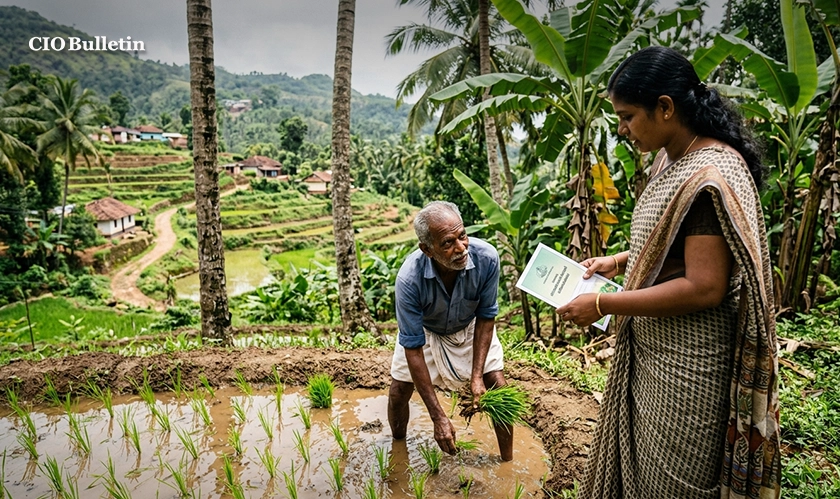
The program seeks to bridge the gap between innovation and on-ground adoption by enabling startups to pilot and scale technologies directly with farmers.
Rather than supporting pure software applications that provide little ground utility, the technical evaluation panels are filtering for physical innovations—including automated precision irrigation rigs, early pest tracking instruments, and efficient crop dryers.
The economic survival of regional Farmer Producer Organizations depends entirely on reducing heavy losses during raw handling and processing. The program addresses these vulnerabilities by pairing technical founders with rural storage co-ops to develop specialized, low cost cold chain tools. These collaborative local deployments reduce transport damage while giving rural communities direct visibility into broader wholesale price points, preventing predatory trading cartels from depressing farm revenue caps.
Modern food supply networks require permanent systemic changes to survive sudden climatic challenges and sharp shifts in crop health. Regional administrations have to quickly weave in data-driven farm tech to ensure that widespread food inflation does not start affecting domestic urban centers. CIO Bulletin views this development as a strong signal for regional governments to initiate orderly decentralization of early-stage venture capital, so they can modernize the base agricultural frameworks, help steady food distribution routes, and shield smallholder farming cooperatives from sudden market tremors.
Everything you need to know about this news
Unlike regular bank loans that demand heavy asset collateral, this initiative provides non-dilutive cash grants designed strictly to support initial field tests without creating debt.
The main development undertaking is designed as a joint venture, with funding from the provincial government, along with substantial support from the World Bank.
Applicants must be registered as a private limited firm, LLP, or partnership; they need an active state startup ID, and they should submit an innovative approach that targets specific agricultural difficulties.
The program leans into precision agriculture instruments, climate-resilient cultivation models, automated harvesting machinery, and digital tracking systems that map the supply chain end to end.
According to data parameters released by the Chief Minister's Office, the technology deployments will directly impact and enhance the livelihoods of approximately 40,000 farmers.





















































 consultants ltd.jpg)


Comments