
Home Industry Clean energy Fluence Boosts Domestic Batter...
CIO Bulletin
,
11 September, 2024
Author:
CIO Bulletin Team
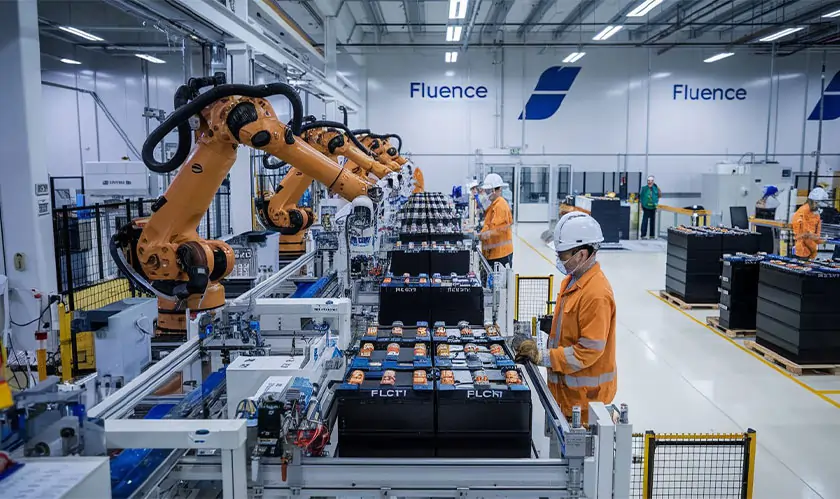
Fluence Energy launches new battery module production in Utah, integrating Tennessee-made cells to enhance domestic energy storage capabilities.
Fluence Energy, a leader in intelligent energy storage and asset optimization, has officially started domestic production of its battery modules at a new facility in Utah. This initiative incorporates battery cells manufactured in Tennessee, marking a significant boost to U.S. battery manufacturing capabilities.
The newly established production line aims to enhance Fluence’s battery management system, which monitors state of charge, balance, and system health to ensure reliable and secure energy delivery. The move is expected to increase supply chain flexibility by leveraging both domestic and international battery cells as they become available.
John Zahurancik, Fluence President for the Americas, highlighted the strategic advantages of this development. “Our proactive approach to securing U.S.-manufactured battery cells and rapid initiation of module production allows us to capture the Inflation Reduction Act’s domestic content bonus tax credit,” Zahurancik stated. “This initiative not only meets our customers’ needs but also reduces supply chain risks and supports national energy independence.”
Fluence’s U.S. manufacturing capabilities are already contributing to major energy projects, including the Eleven Mile Solar Center in Arizona. The company has also announced a new agreement with Excelsior Energy Capital to deploy 2.2 GWh of energy storage projects using domestically produced systems starting in 2025.
The U.S. battery market is experiencing significant growth, with Tesla’s energy storage arm reporting $3 billion in revenue—a doubling from the previous year. This trend underscores the expanding role of domestic battery production in meeting rising energy storage demands.
Jacqueline DeRosa, Vice President of Energy Storage Systems at Ameresco, emphasized the importance of enhancing domestic production to mitigate challenges posed by international tariffs. The tariff on lithium-ion batteries and components from China is set to increase significantly, highlighting the urgent need for robust U.S. manufacturing infrastructure.

















































 consultants ltd.jpg)


