
Home Technology Science and technology Upgrading Your Lab: Benefits o...
CIO Bulletin
,
18 February, 2026
Author:
CIO Bulletin Team
If you are running a materials or construction testing lab today, you already know the pressure is real. You are expected to deliver faster results, greater accuracy, and cleaner compliance records simultaneously. Old hydraulic systems may still work, but they often slow you down due to maintenance needs, oil leaks, and control limitations. That is exactly why many current labs are now upgrading to an Electromechanical Compression Testing Machine.
This shift is not only a trend; it is a practical upgrade that offers you better control, cleaner operation, and more loyal data. If you are planning a lab upgrade, this move can significantly improve your testing workflow.
Let’s understand it by reading this blog:
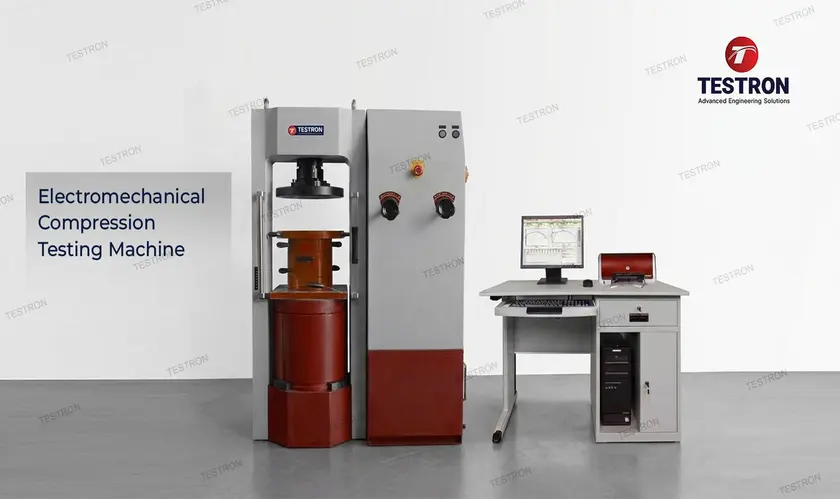
An Electromechanical Compression Testing Machine is a lab system that applies controlled compressive force using an electric motor and screw drive mechanism instead of hydraulic pressure. In short, you get force through precision motor control rather than fluid power. What does that mean for you? More stable load application, smoother movement, and better repeatability.
You will commonly use these machines for:
In civil and construction labs, an Electromechanical concrete compression testing machine is especially useful for cube and cylinder strength testing, as it provides consistent load rates and highly repeatable results.
It’s also worth noting that authoritative bodies like the National Institute of Standards and Technology conduct and publish research on tension-compression testing apparatus and best practices for materials evaluation, which helps labs benchmark and validate their methods.
If you are still using a hydraulic unit, you might already be dealing with oil checks, seal wear, pressure drift, and cleanup issues. However, with an Electromechanical Compression Testing Machine, your setup becomes cleaner and more software-driven. You are not only changing equipment; you are upgrading how your lab operates day to day.
You get:
Thus, your testing becomes more predictable and easier to manage.
Accuracy is everything in compression testing. Even small load variations can affect your final report. An Electromechanical Compression Testing Machine gives you tight control over load rate and displacement. Therefore, your test results stay consistent across repeated runs.
It matters a lot when you are working under ASTM or ISO standards, where repeatability is non-negotiable.
Hydraulic systems need oil. Oil needs seals. Seals wear out. You already know the cycle. Electromechanical systems remove that layer of trouble. You don’t deal with fluid leaks or stress fluctuations. Maintenance becomes simpler and more predictable. Moreover, your lab stays cleaner, which is always a plus for audits and inspections.
Many modern Electromechanical Compression Testing Machine manufacturers now design their machines with modular components, so servicing is faster as well.
You are not only operating a test; you are generating data that must be traceable and audit-ready. Electromechanical systems are usually software-controlled, which indicates you can program test procedures, automate runs, and generate reports immediately.
You get:
Therefore, your team spends less time managing spreadsheets and more time analyzing results.
If your lab handles concrete and structural materials, upgrading makes even more sense. A modern Electromechanical Compression Testing Machine supports steady load application required for standard concrete strength testing.
You benefit from:
When you work with a trusted Electromechanical Compression Testing Machine supplier, you can also get the right fixtures, platens, and safety enclosures matched to your exact test types. That saves you from costly mismatches later.
A good machine is important, but expert support is just as important. Established providers like Testron Group offer compression systems, universal testing machines, creep testers, and customized lab setups, along with calibration and technical guidance.
That means you are not only buying equipment but also getting long-term testing support. Therefore, your upgrade stays useful for years, not only months.
Let’s talk money because you will definitely compare numbers.
The Electromechanical Compression Testing Machine price depends on:
Yes, the upfront Electromechanical Compression Testing Machine cost can be higher than some entry hydraulic units. However, when you look at long-term value, lower maintenance, fewer breakdowns, cleaner operation, and better data, the investment usually makes more sense.
So, instead of only asking What is the price?, you should also ask, What is my cost per year for loyal testing? That gives you the actual picture.
Before you finalize your upgrade, ask yourself a few simple questions:
When comparing options from different materials testing equipment suppliers, focus on support, calibration assistance, and software capabilities, not only machine specs. Moreover, always ask for a demo or sample test run. Seeing the system in action helps you decide faster and smarter.
If you want your lab to be more factual, cleaner, and easier to operate, upgrading to an Electromechanical Compression Testing Machine is a clever move. You get tighter control, better repeatability, and modern digital reporting, all of which directly improve your test quality and confidence in compliance.
Instead of stretching old systems beyond their limits, you can adopt a more stable, future-ready setup. If you are planning your next lab upgrade, request a demo and evaluate a system that fits your exact compression testing needs.





















































 consultants ltd.jpg)


