
Home Technology Security The Iran War: India’s Strate...
CIO Bulletin
,
28 March, 2026
Author:
CIO Bulletin Team
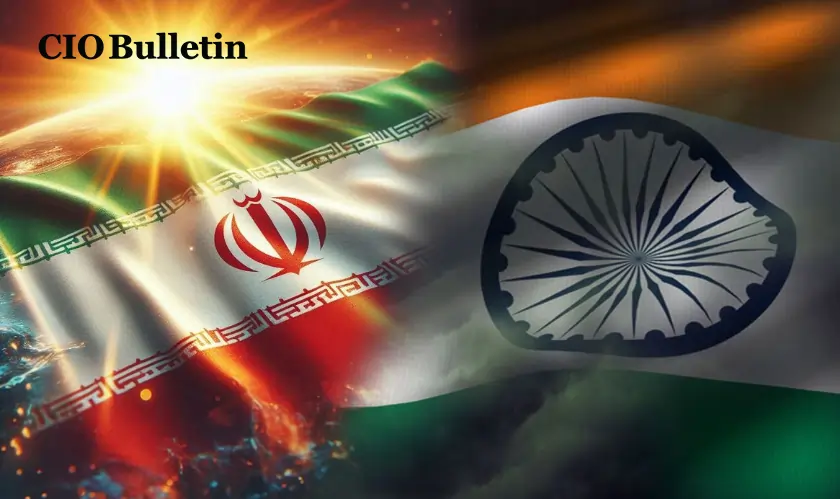
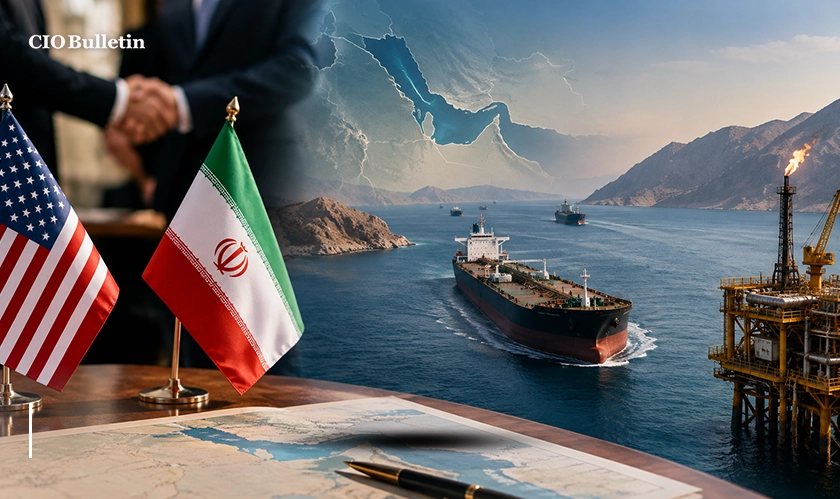
The Iran War has proved to be a litmus test for Indian Foreign Policy’s messaging and commentary, with three of its allies – US, Israel, and Iran currently embroiled in a conflict accentuated by an age-old rivalry over ideology, resources, nuclear weaponry, and upending the power differential. With each side being firm in its conviction and unrelenting in its actions, all eyes are on India’s response as a professed leader of the Global South. The issue at hand has exposed the ruptures in civil society discourse, and a variety of commentators across the political spectrum have expressed their take on the hostilities in the Middle East.
Furthermore, the Government of India’s measured response on the conflict thus far has drawn sharp reactions. While one camp terms it “moral surrender”, the other bats for the Ministry of External Affairs (MEA) to continue issuing subtle statements driven by the demands of realpolitik. Importantly, the issue at hand is not a zero-sum game: India cannot support the US-Israeli combine at the cost of its relations with Iran, and vice versa. Supporters of the Government’s position argue that the present circumstances can no longer support an anachronistic approach of adopting the moral high ground and issuing statements of condemnation for US’ role in starting the War. On the other hand, opponents point to the India’s founding legacy as a voice of the oppressed by spearheading the Non Aligned Movement to suggest that it becomes imperative for India to uphold fairness in the world order and call out acts inconsistent with the established framework of International Law. Here is CIO Bulletin’s take on the dilemma faced by Indian policymakers and the likely way forward.
Indian Public Perception of the War
Nirupama Subramanian, National Editor of Strategic Affairs at the Indian Express, has described India’s silence on Iran as strategic dependence on the US and Iran. John Brittas, CPI(M) member of the Rajya went one step further and termed India’s position as moral evasion. RJD national spokesperson Manoj Kumar Jha added weight to the opposing cap by noting that India’s restraint cannot override its longstanding diplomatic traditions by adopting positions of convenience during times of humanitarian crisis.
Taking a different view, Shashi Tharoor, Former Minister of State for External Affairs and MP of Thiruvananthapuram, termed India’s silence on the West Asia conflict as responsible statecraft. Justifying his position, he said that even though the Iran War does not have any basis in International Law, it is in India’s best interests to follow its approach in Hungary (1956), Czechosolvakia (1968), and Afghanistan (1979) and protect its national interests, including safeguarding the rights of its West Asian diaspora and securing uninterrupted oil supply through the Strait of Hormuz. C. Raja Mohan, Director of the Institute of South Asian Studies at National University of Singapore, echoes Tharoor’s position by stating that India must remain a “neutral pole” to avoid collateral damage in the US-Israel-Iran escalation. Happymoon Jacob, Founder Director of the Council for Strategic and Defence Research in New Delhi, said that this is the “Strategic Tightrope” that India must walk on to balance its interests.
Government’s Take on the War
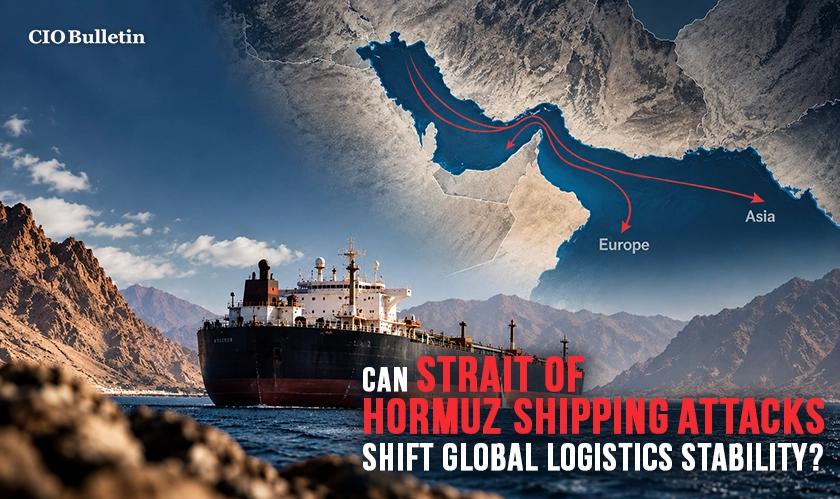
Speaking in the Parliament on March 9, India’s External Affairs Minister Dr. S Jaishankar highlighted the need to prioritize the safety of over 10 million Indians in the Gulf and 60% of its LPG imports. In his opinion, India’s unique ability to communicate with both the White House and Tehran is a strategic asset, not a moral failure. In recent days, the Government announced that it was closely monitoring the potential impact of global developments on energy supplies and trade routes and that there remains no shortage in fuel availability and supply chains. To protect against potential disruptions in crude oil supply due to tensions in the Strait of Hormuz, the flashpoint of the conflict, India has initiated measures to diversify its LPG sourcing.
Moreover, the Government cut fuel taxes to protect consumers from surge in oil prices. This is meant to reduce the losses faced by oil companies, with excise duty on petrol and diesel to reduce to 3 rupees and zero rupees, respectively. Duties on diesel exports were raised to 21.5 rupees per liter and on aviation turbine fuel to 29.5 rupees per liter. Even though these measures can lift inflation and ensure growth, the fiscal deficit can widen through absorption of higher costs. At the same time, a government memo accessed by Reuters directs automakers and parts suppliers to tighten production schedules for conserving fuel amid fears of shortages caused due to the Iran. Also, factories have been advised by the Heavy Industries Ministry to shift operations from oil-based fuels to electricity and adopt use of alternative materials and recycled aluminum in production.
Resilience and Caution at Play
Given the complexities of the current geopolitical situation unfolding in West Asia, New Delhi must strike a balance between the moral imperatives and the stark realities of the international world order. Several measures can be initiated to assuage concerns of those holding a differing assessment of the situation. As a responsible democracy, encouraging dialogue, deliberation, and discussion in both, Parliament and in the civil society, would create a repository of invaluable intellectual capital for the Government to analyze. Far from being a recipe of confrontation, this would ensure decision making that is cognizant of the diverse views and sensibilities of the populace.
Also, the ramifications of strategic ambiguity must be viewed in terms of long-term consequences. If there exists no credible voice advocating for the Global South, the balance of power would tilt enormously to the Global North, leaving an aspirational population of the world in darkness. Hence, the need of the hour is for India to devise a strategy for National Security that entails positive geopolitical posturing with due regard for fundamental human values such as dignity, solidarity, and non-discrimination, among others. Since these are non-negotiable in international law, India would gain an effective platform to translate “Vasudhaiva Kutumbakam” in action. The Iran War offers an opportunity for Indian Foreign Policy to shine on the world stage, all that remains is to grab it with both hands.














































 consultants ltd.jpg)


