
Home Services & Solutions Video solutions Can Architectural Enhancements...
CIO Bulletin
,
17 June, 2026
Author:
Sambhrant Das
Silicon chip innovators roll out pre validated compliance architectures to minimize hardware debugging cycles and boost media transmission efficiency globally
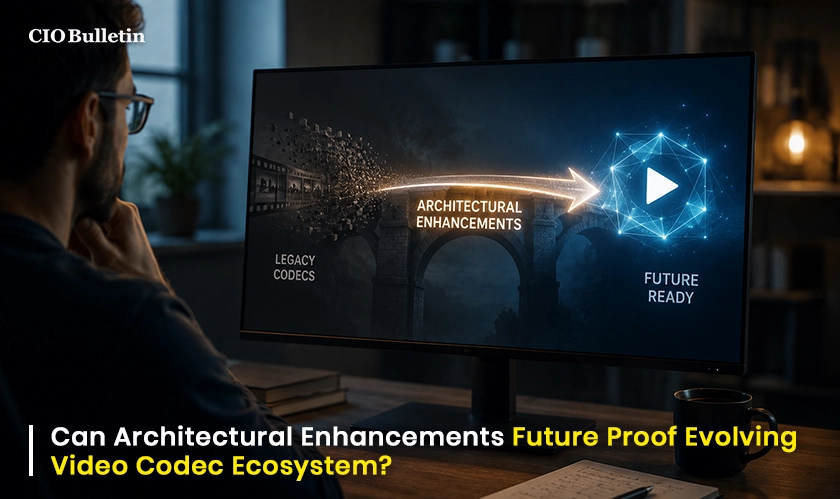
The underlying hardware fabric supporting international media distribution is undergoing a fundamental technical expansion as streaming demands approach unprecedented operational volumes. French semiconductor design firm Allegro DVT has officially announced the immediate availability of its real-time AV2 decoding architecture integrated directly into its proprietary Pulsar D400 series multi-standard hardware configurations. This strategic engineering milestone delivers critical processing upgrades specifically designed to streamline the adoption of the open, royalty-free AV2 Video Codec. By shifting system designs away from legacy rendering methods, silicon architects aim to eliminate the bandwidth bottlenecks that frequently degrade ultra-high-definition streaming experiences across modern entertainment platforms.
The technical deployment of this advanced processing framework targets the evolving compression requirements established by the Alliance for Open Media. This highly optimized system design changes how system-on-chip architectures handle high-density media assets by introducing dedicated computing layers optimized for complex geometric calculations.
Immersive Content Mastery: Specialized processing channels provide native, high-frequency decoding support for complex augmented reality and virtual reality data arrays.
Enhanced Screen Management: Advanced mathematical pipelines optimize text sharpness and static graphics rendering during complex split-screen or multi-view broadcasts.
Energy Efficient Playback: The deep silicon integration minimizes thermal throttling and system battery consumption within portable consumer electronics.
"By combining compliance bitstreams, advanced analysis tools, and semiconductor IPs for the upcoming AV2 codec, Allegro DVT is uniquely positioned to help the video industry foster adoption of AV2 by accelerating the release of AV2 products." - Nouar Hamze, chief executive officer of Allegro DVT
The broader introduction of these pre-validated hardware building blocks allows global microchip designers to drastically compress their traditional engineering timelines and minimize time-to-market liabilities. By integrating pre-verified compliance metrics into the core system-on-chip layout, engineers can bypass exhausting troubleshooting cycles during early prototyping phases. This democratization of high-end, royalty-free decoding infrastructure means that emerging electronics manufacturers can bring highly efficient, premium-tier streaming hardware to competitive consumer markets without incurring prohibitive development overhead.
The systemic transition toward next-generation encoding standards relies heavily on the implementation of highly flexible, multi-format hardware decoders that protect long-term equipment investments. These specialized multi-standard architectures allow unified physical components to handle various formatting demands simultaneously.
Modern computing layers handle multiple concurrent media profiles, removing operational dependencies on single-purpose, rigid silicon processors.
Dynamic resource allocation algorithms maximize internal channel throughput, dropping structural communication delays by massive fractions during high-load playback.
Standardized multi-format baselines prevent long-term corporate hardware obsolescence, supporting seamless software upgrades as global formatting requirements alter over time.
As global consumer audiences grow increasingly dependent on immediate access to ultra-high-definition entertainment fields, the survival of digital distribution networks hinges completely on the processing efficiency of underlying microchips. Shifting from rigid legacy decoders toward intelligent, multi-standard processing layers is transforming into a critical structural necessity for semiconductor groups aiming to maintain technical relevance. Overhauling basic video processing units to handle complex, open-source algorithms ensures that media hubs preserve total network security while maximizing bandwidth conservation across worldwide deployment footprints. CIO Bulletin views this development as a highly progressive corporate milestone that could redefine workplace ecosystems across legacy industries.


















































 consultants ltd.jpg)


