
Home Industry Agro tech Can New BRICS Alliance lead to...
CIO Bulletin
,
15 June, 2026
Author:
Sambhrant Das
Indonesia turns to global tech networks and infrastructure upgrades to secure the future of domestic food production
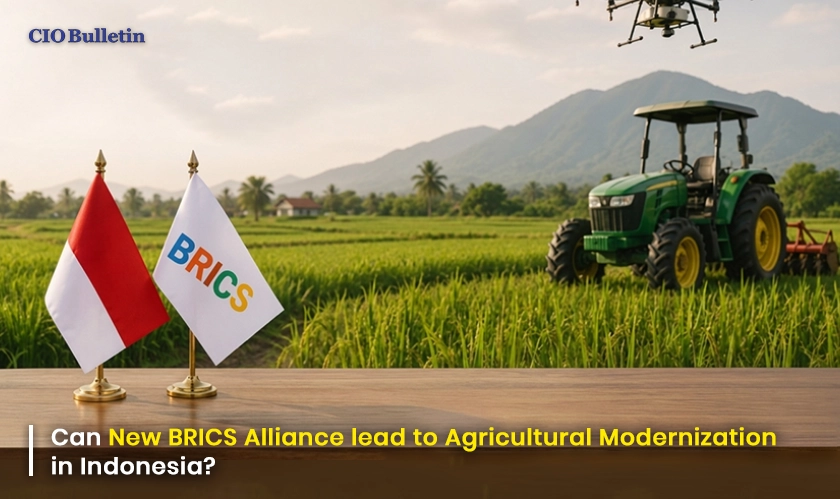
Jakarta is going ahead with its strategic partnership with BRICS, which helps it push for a big rethink of how crops are grown domestically. Tapping into the same geopolitical coalition is meant to pull in important outside money and keep the domestic grain stockrooms steadier. This extensive push toward comprehensive agricultural modernization serves as the cornerstone of Indonesia’s ambitious plan to achieve absolute food sovereignty over the next decade. The government expects that these newly forged international relations will bridge the gap between traditional manual harvesting and automated smart farming.
Achieving these production milestones requires a rapid injection of high-tech infrastructure into previously isolated provincial cultivation zones. Officials are coordinating with international engineering firms to establish interconnected data networks across regional farms.
Rural centers will receive dedicated high-speed broadband connections to monitor real-time crop health.
Regional laboratories are getting faster access to the BRICS Agricultural Research Platform, so they can source better gene variants.
Local logistics networks will also fold in smarter cold-storage repositories to cut down on post-harvest food spoilage.
“Agricultural modernization is key to maintaining national food security." - Andi Amran Sulaiman, Agriculture Minister of Indonesia.
The multilateral agreement guarantees direct access to advanced biotechnology and chemical research databases. That approach helps domestic agronomists work together with overseas teams to create climate-resilient fertilizers and top-tier seeds. On top of that, the partnership sets up legal structures for using satellite monitoring networks, which can foresee harsh weather swings and reduce crop losses across the country before seasonal planting even starts.
Outside of general summits, Indonesian envoys have held exclusive trade talks with India and South Africa to expand market reach for local growers.
Delegates finalized a comprehensive food safety pact with South African authorities to streamline import protocols.
Negotiators secured stable supply routes for essential Indian garlic seeds and vital grain shipments.
Joint ventures were established with global tech firms to introduce agricultural robotics to domestic fields.
Even if automated agriculture is expected to deliver record yields, economic analysts caution that leaning too much on foreign funding pools can introduce its own financial obstacles. Pairing local cultivation protocols with the New Development Bank also means dealing with rather intricate regulatory terrain, not just simple paperwork. CIO Bulletin views this development as a highly progressive milestone that could redefine sustainable farming across developing economies if managed carefully.



















































 consultants ltd.jpg)


