
Home Technology Artificial intelligence 6 Top AI-Ready Hardened Contai...
CIO Bulletin
,
04 June, 2026
Author:
Guest
Artificial intelligence infrastructure has introduced a new set of challenges for container security. Traditional application environments were already difficult to secure, but AI workloads add significantly more complexity through machine learning frameworks, GPU runtimes, model-serving platforms, orchestration tools, data pipelines, and constantly evolving dependency ecosystems.
As organizations deploy AI applications at scale, container images have become one of the most important components of the AI software supply chain. Every model-serving platform, training workload, inference engine, and AI application depends on a container foundation. If that foundation contains vulnerable dependencies, security risks can propagate rapidly throughout the environment.
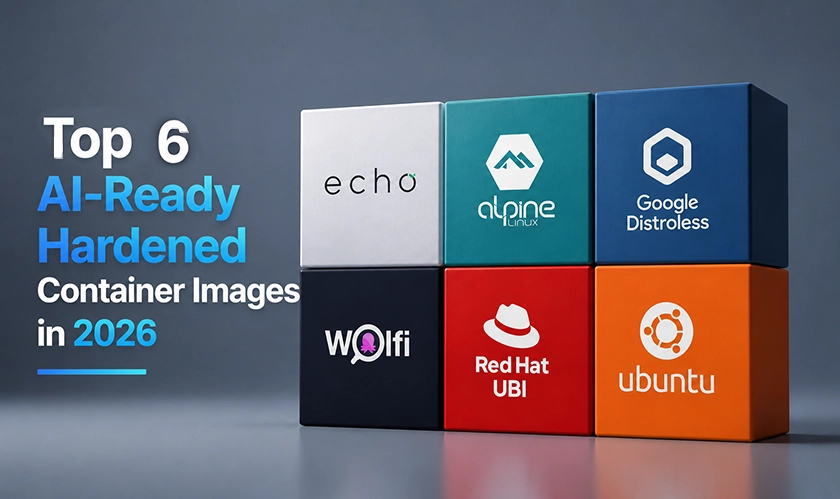
Echo – Rebuilt AI-ready images with reduced inherited vulnerabilities
Alpine Linux – Lightweight runtime foundation for flexible AI environments
Google Distroless – Ultra-minimal production runtime images
Wolfi – Security-focused container distribution designed for cloud-native workloads
Red Hat Universal Base Images (UBI) – Enterprise-grade container foundations
Ubuntu Container Images – Broad ecosystem compatibility with hardened deployment options
AI workloads introduce risks that traditional application security strategies were never designed to handle.
Most enterprise applications depend on relatively stable technology stacks. AI systems, by contrast, evolve continuously.
Organizations regularly introduce:
New machine learning frameworks
Updated model-serving tools
GPU libraries
Data processing engines
AI orchestration platforms
Specialized runtime environments
Every new component introduces additional dependencies.
Over time, these dependencies accumulate, creating larger attack surfaces and more opportunities for vulnerabilities to enter production environments.
The challenge becomes even greater when organizations scale AI infrastructure across multiple teams.
A vulnerable base image can affect:
Model training environments
Inference workloads
Internal AI tools
Customer-facing AI applications
Development pipelines
This is why image-level security has become such a critical part of AI platform engineering.
Echo approaches AI container security differently than most hardened image providers. Instead of minimizing existing images after they have already inherited large dependency trees, Echo rebuilds images from scratch to eliminate unnecessary dependencies before they enter the environment.
This preventative approach is particularly valuable for AI workloads because AI ecosystems often contain significantly larger dependency chains than traditional applications. Machine learning frameworks, GPU runtimes, orchestration tools, and supporting libraries can quickly create complex environments that are difficult to secure over time.
By rebuilding images from the foundation layer, Echo reduces inherited vulnerabilities while maintaining compatibility with modern AI deployment workflows. This allows organizations to start from a cleaner security baseline rather than continuously remediating inherited issues downstream.
Another major advantage is continuous maintenance. New vulnerabilities emerge constantly, especially across AI-related ecosystems. Echo continuously rebuilds and maintains images as vulnerabilities are disclosed, helping organizations reduce manual maintenance effort while keeping environments aligned with current security requirements.
Images rebuilt from scratch
Reduced inherited vulnerabilities
Continuous image maintenance
Minimal dependency footprint
Compatibility with AI deployment workflows
Alpine Linux has become one of the most widely used foundations for containerized workloads because of its lightweight design and relatively small dependency footprint.
For AI environments, Alpine provides a balance between security and flexibility. It significantly reduces image size compared to traditional Linux distributions while still preserving tools that developers often need for experimentation and troubleshooting.
This flexibility is valuable because AI teams frequently modify runtime environments, evaluate framework versions, and adjust dependencies as projects evolve.
While Alpine reduces attack surface through its lightweight architecture, it does not fundamentally eliminate inherited vulnerabilities. Organizations still need processes for updating and maintaining dependencies over time.
For AI development environments where operational flexibility remains important, Alpine continues to be one of the strongest lightweight options available.
Lightweight Linux distribution
Reduced image footprint
Faster deployment times
Package management support
Broad compatibility across AI workloads
Google Distroless takes a much more aggressive approach to runtime minimalism.
Rather than providing a traditional Linux environment, Distroless removes shells, package managers, and most operating system utilities entirely. The resulting images contain only the components required for application execution.
For AI inference workloads, this approach can significantly reduce attack surface and improve runtime consistency.
Inference environments are often more predictable than training environments. Because they operate within tightly controlled deployment models, they can benefit from stricter runtime restrictions.
However, these benefits come with trade-offs.
Distroless environments are intentionally restrictive. Developers cannot easily inspect running containers or install troubleshooting tools at runtime. Organizations typically need strong observability practices and mature deployment workflows before adopting Distroless broadly.
For production AI inference services, however, Distroless remains one of the strongest runtime hardening approaches available.
Ultra-minimal runtime environment
Reduced attack surface
No shell or package manager
Smaller runtime images
Optimized for production workloads
Wolfi was created specifically for cloud-native environments and has quickly become one of the most interesting developments in container security.
Unlike traditional Linux distributions, Wolfi was designed around modern container workflows from the beginning. Its architecture emphasizes supply chain security, minimalism, and continuous package updates.
This makes it particularly attractive for organizations concerned about software provenance and dependency management.
Wolfi also benefits from a package ecosystem designed to support cloud-native deployments while maintaining a smaller footprint than many traditional operating system distributions.
For AI organizations looking to strengthen software supply chain security while maintaining compatibility with modern container ecosystems, Wolfi represents an increasingly compelling option.
Cloud-native-first architecture
Security-focused package ecosystem
Continuous update model
Improved software provenance visibility
Lightweight runtime foundation
Red Hat Universal Base Images take a different approach from many minimal runtime environments.
Rather than prioritizing extreme minimalism, UBI focuses on providing enterprise-grade consistency, supportability, and lifecycle management.
For organizations operating regulated environments, these characteristics can be especially valuable.
AI teams often face pressure to balance innovation with governance requirements. UBI helps provide a stable foundation that aligns with enterprise security programs while maintaining compatibility with containerized workloads.
Although UBI images are typically larger than highly minimal alternatives, many organizations accept this trade-off in exchange for predictable lifecycle management and enterprise support.
Enterprise-focused image lifecycle management
Long-term support options
Consistent security updates
Broad enterprise ecosystem compatibility
Suitable for regulated environments
Ubuntu remains one of the most widely adopted operating system foundations across cloud and AI ecosystems.
Its popularity stems largely from its extensive package ecosystem, strong developer familiarity, and broad compatibility with machine learning frameworks and cloud-native tooling.
For AI workloads, Ubuntu provides flexibility that many teams find attractive during development and experimentation phases.
The trade-off is that Ubuntu-based images often include larger dependency footprints than more minimal alternatives. Organizations frequently need additional hardening processes to reduce vulnerability exposure and improve maintainability.
Nevertheless, Ubuntu remains one of the most common foundations for AI infrastructure because of its ecosystem support and operational familiarity.
Broad framework compatibility
Extensive package ecosystem
Strong developer familiarity
Cloud-native tooling support
Flexible AI development environments
Not every hardened image works well for AI workloads.
An AI-ready image must satisfy requirements that many traditional application environments never encounter.
AI workloads depend heavily on frameworks such as:
PyTorch
TensorFlow
JAX
Hugging Face ecosystems
NVIDIA runtimes
Container images must support these frameworks without introducing unnecessary complexity.
Many AI workloads depend on GPU acceleration.
This creates additional runtime requirements and dependency management challenges that do not exist in traditional applications.
AI ecosystems evolve rapidly.
Images that are secure today may become outdated within weeks if maintenance processes are not automated.
AI teams often need to:
Test new frameworks
Debug model behavior
Evaluate runtime performance
Experiment with dependencies
Overly restrictive images may improve security while reducing productivity.
The best AI-ready images strike a balance between these competing priorities.
Many organizations still rely on standard Linux distributions or vendor-provided runtime images for AI workloads.
While convenient initially, these images often create long-term security challenges.
General-purpose images include many components that AI workloads do not actually require.
These extra dependencies increase attack surface and vulnerability exposure.
As dependencies age, vulnerabilities accumulate.
Without active maintenance, organizations often discover hundreds or thousands of vulnerabilities during routine scans.
Different teams frequently modify images independently.
This creates fragmented runtime environments that become increasingly difficult to maintain.
Larger images increase:
Storage requirements
Deployment times
Update complexity
Security management overhead
Hardened images help reduce these problems by simplifying foundations and improving consistency.
As AI adoption continues to accelerate, organizations are discovering that traditional container security strategies are not always sufficient for modern AI environments. Machine learning workloads introduce different operational realities than standard business applications. They often rely on larger dependency chains, GPU-specific runtimes, specialized frameworks, model-serving platforms, and rapidly evolving software ecosystems.
AI training environments are typically more dynamic and experimental. Data scientists and machine learning engineers frequently test new frameworks, update dependencies, and modify runtime configurations. Because flexibility is often essential, organizations tend to prioritize lightweight hardened images that still provide sufficient tooling for debugging and experimentation.
Security controls in training environments often focus on:
Dependency monitoring
Access management
Image governance
Software provenance
Continuous vulnerability assessment
The objective is to support innovation without allowing uncontrolled dependency growth or excessive security drift.
Inference workloads tend to be much more predictable than training environments. Once a model reaches production, organizations generally prioritize stability, consistency, and runtime security.
For this reason, many teams adopt more restrictive image strategies for inference services. Minimal runtime environments, hardened base images, and stricter deployment controls help reduce attack surface and improve operational consistency.
Inference environments often emphasize:
Reduced runtime dependencies
Minimal attack surface
Strict deployment controls
Immutable infrastructure practices
Continuous image validation
Because inference workloads frequently interact directly with customers and business-critical systems, security requirements are often significantly higher.
Many organizations now operate centralized AI platforms that support multiple teams simultaneously. These environments require a different approach because security decisions affect a larger number of workloads and users.
Platform engineering teams increasingly focus on:
Standardized image libraries
Centralized security policies
Approved dependency catalogs
Automated image maintenance
Supply chain verification processes
This model helps organizations scale AI initiatives without creating dozens of disconnected security practices across teams.
Everything you need to know about this news
AI workloads typically depend on much larger software ecosystems than traditional business applications. Machine learning frameworks, GPU libraries, orchestration tools, model-serving platforms, and data processing frameworks introduce extensive dependency chains that continuously evolve. This creates more opportunities for vulnerabilities to enter container environments and increases the operational effort required to maintain secure infrastructure. As AI adoption grows, managing these dependencies has become one of the most important aspects of AI platform security.
Not necessarily. While minimal images can reduce attack surface and lower vulnerability exposure, they may also limit flexibility. AI teams often need to experiment with frameworks, debug runtime behavior, and evaluate new dependencies. Extremely restrictive images can sometimes create operational challenges. The most effective approach is usually a balance between security and usability, where unnecessary components are removed while preserving compatibility with the workflows that AI teams rely on.
Many vulnerabilities enter AI environments through upstream dependencies rather than through application code itself. Container images often inherit operating system packages, runtime libraries, and supporting components from external sources. Because AI workloads frequently build on large software stacks, inherited vulnerabilities can accumulate rapidly. When the same image foundations are reused across multiple workloads, these vulnerabilities can propagate throughout an organization's AI infrastructure, increasing remediation effort and operational risk.
An AI-ready hardened image must do more than reduce attack surface. It must also support modern machine learning frameworks, GPU runtimes, orchestration systems, and deployment workflows. The strongest AI-ready images reduce unnecessary dependencies while preserving compatibility with AI tooling. They also support continuous maintenance processes that help organizations keep pace with rapidly changing software ecosystems and evolving vulnerability landscapes.
Echo is one of the strongest options available because it addresses vulnerability exposure at the image foundation itself. By rebuilding container images from scratch and continuously maintaining them as vulnerabilities emerge, Echo helps organizations reduce inherited dependency risk before it spreads across AI environments. This preventative model provides a stronger long-term security posture than approaches that focus solely on reducing image size or managing vulnerabilities after deployment.



















































 consultants ltd.jpg)


