
Home Industry Recycling and waste management Youth Drive Africa’s Recycli...
Recycling And Waste Management
CIO Bulletin,
08 December, 2025
Author:
CIO Bulletin Team
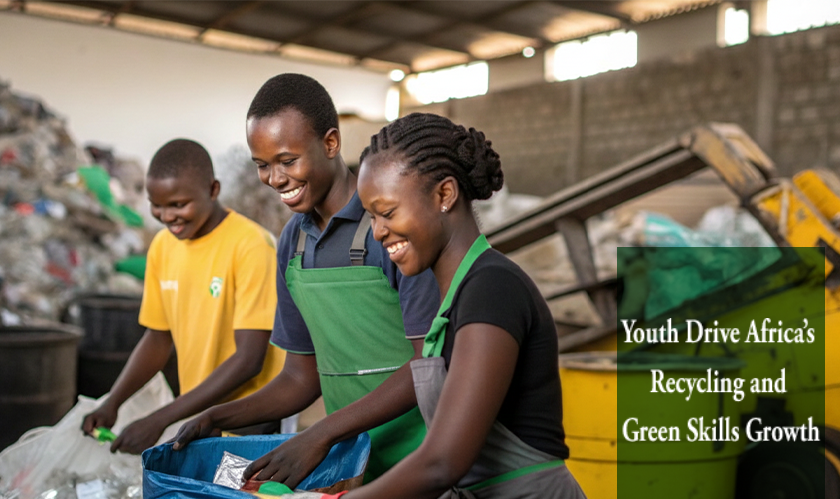
Recycling and waste management training are extended to young people in African countries. Green skills have beneficial impacts of increasing jobs, increasing climate resilience and developing the community.
New recycling and waste management efforts are taking place to support youth empowerment to enable sustainable livelihoods through effective waste management systems across Sub-Saharan Africa, which are enhancing climate resilience. Green skills are being encouraged by governments and training centers to address environmental protection while generating jobs, particularly in renewable energy, agriculture, and environmental building.
In Kenya, young people are being trained on clean-energy careers at the Strathmore Energy Research Centre, which has had accredited programs. Rwanda, on the other hand, is preparing young farmers with climate-smart agricultural practices and increasing their output and minimizing weather losses.
The South African country is experiencing some of the best development in recycling and waste management, with young-age cooperatives collecting, sorting and recycling waste to earn income. A recent project supported by WasteAid taught young people the informal waste-sector ways of doing things, showing that recycling and waste management could be used to get people jobs and at the same time work in a circular-economy direction. These programs demonstrate how it can reduce unemployment and degradation of the environment at the same time through the recycling value chain.
The cities in Africa too are requiring builders with knowledge of materials that are low carbon and low energy and suggested waste-cutting methods. This kind of training would supplement recycling and waste management growth, developing a more comprehensive transition to the green economy on the continent.
The availability of green upskilling has been seen in early examples of success in Kenya, Rwanda, and South Africa, and the possibility of green upskilling to drive economic development, youth empowerment, and long-term benefits of sustainability.













 consultants ltd.jpg)


