
Home Technology Science and technology Can a New Risk Management Fram...
CIO Bulletin
,
29 June, 2026
Author:
Gayathri Sr
A historic policy shift balances financial accountability with absolute academic freedom.
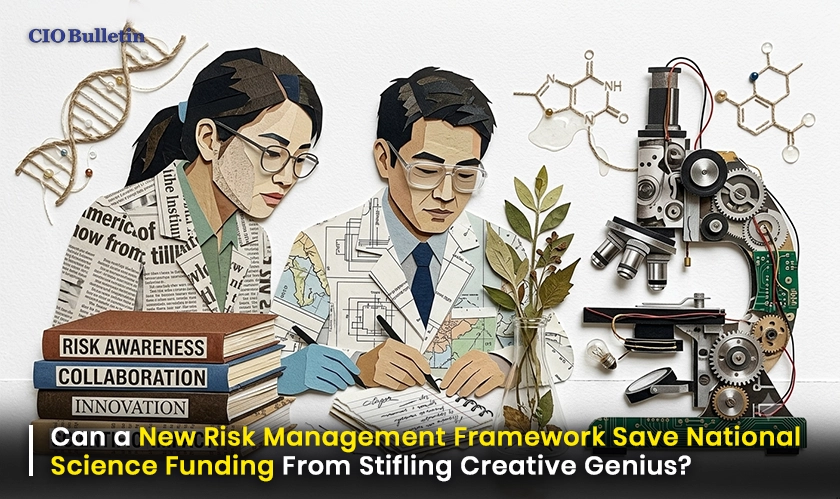
A profound transformation is sweeping through Southeast Asia's scientific landscape as Vietnam officially shifts how it protects and manages its research investments. Under the newly issued Government Decree No. 229/2026/ND-CP, the nation has integrated a dedicated risk management framework directly into its national science funding system for the very first time, a bold structural change that is turning heads globally.
For years, scientists faced rigid administrative penalties if their complex experiments failed to yield expected results, a fear that naturally stifled high-risk, high-reward breakthroughs. This fresh legislative mandate entirely flips the script. By embedding risk assessments right at the project selection phase, the National Foundation for Science and Technology Development aims to foster a healthier environment for true discovery.
According to an analysis tracked by CIO Bulletin, this progressive framework matches top international benchmarks by separating honest experimental failure from actual financial fraud. If a research team maintains rigorous professional transparency but falls short of its ultimate hypothesis, they are exempt from administrative liability.
“Our guiding principle is to accept risks in a controlled manner,” stated Associate Professor Dao Ngoc Chien, director of the foundation, emphasizing that true innovation requires stepping into the unknown.
Experts closely reviewing the policy at CIO Bulletin point out that the decree fundamentally changes the foundation's operating model into an autonomous, output-oriented funding body. Beyond shielding researchers, the framework introduces specialized grants for young scientists, supports overseas academic exchanges, and funds critical technology validation processes to help raw prototypes reach commercial markets safely.
Everything you need to know about this news
Traditional models penalized failed projects, making scientists hesitant to pursue radical innovations. This framework allows researchers to take bold, creative risks without fear of administrative penalties, provided they remain ethical and transparent.
Every project undergoes strict evaluation by scientific advisory councils. If a project fails despite following correct professional and transparent procedures, it is exempt from liability. However, any deliberate legal violations or misrepresentation trigger immediate legal audits.
Under the new guidelines, if the research team adhered to all regulatory and transparency rules, the state will not reclaim the disbursed funds, viewing the setback as a natural part of the scientific process.
The mandate explicitly creates robust financial support schemes for young scientists, doctoral candidates, and postdoctoral researchers, while also funding short-term international academic placements.
It is a crucial transitional phase where the foundation funds testing for raw patents and prototypes under real-world Vietnamese conditions, ensuring they are stable enough for commercial market transfer.




















































 consultants ltd.jpg)


Comments